Greater Jerusalem Plan: Dividing the West Bank into Isolated Enclaves
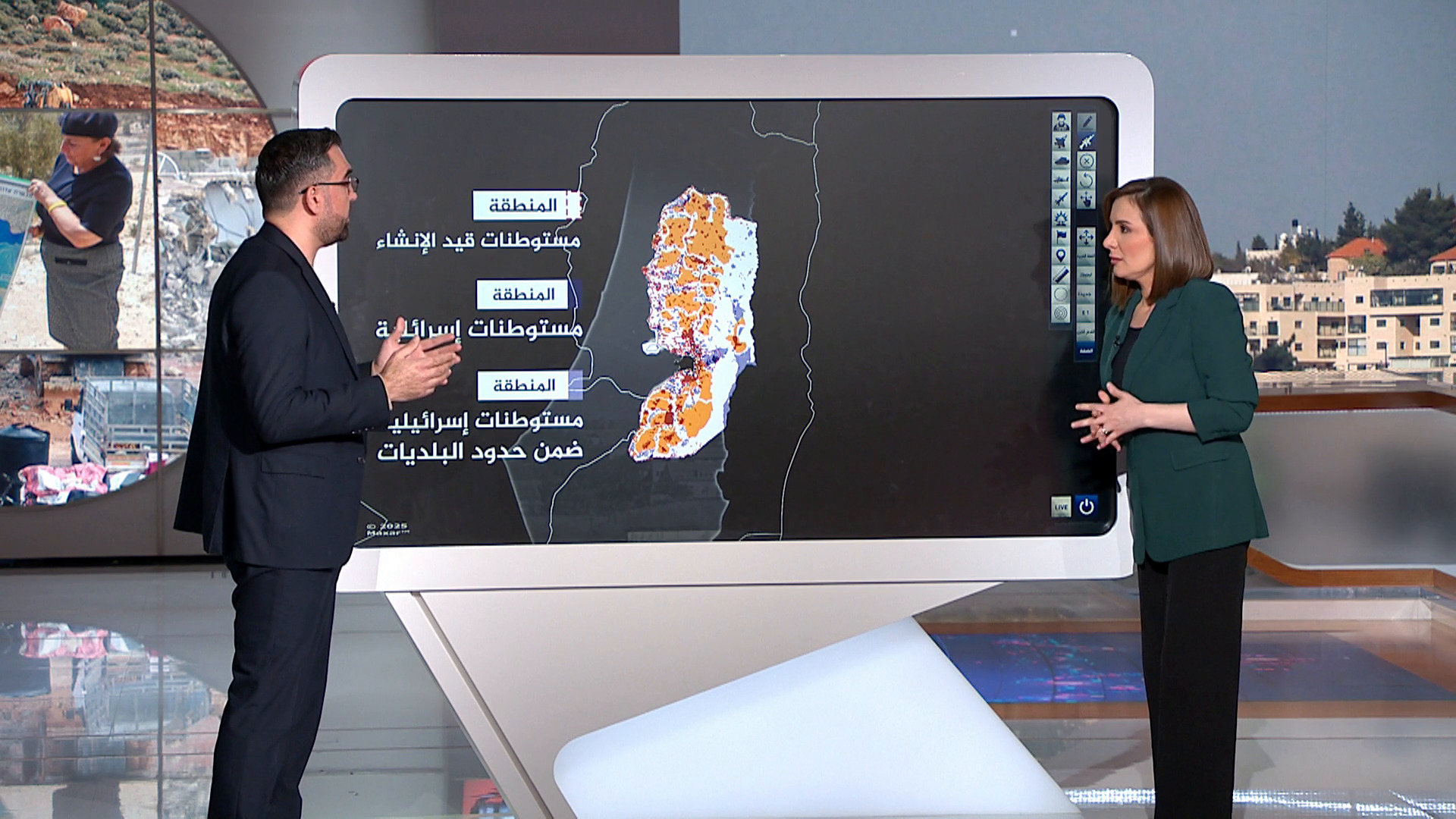
A new report reveals alarming details about Israel’s ongoing plans to reshape the demographics and geography of the West Bank. Dubbed the “Greater Jerusalem” project, these initiatives threaten to sever the northern West Bank from its southern counterpart and completely isolate East Jerusalem from its Palestinian surroundings. The result, according to experts, will be the fragmentation of Palestinian territories into over 200 isolated enclaves, lacking geographical contiguity.
These revelations come on the heels of Israeli Defense Minister’s announcement of plans to construct 1,200 new settlement units in the Beit El settlement, located north of Ramallah. This move is viewed as a direct continuation of accelerated expansionist policies. During a visit to Beit El, the Defense Minister emphasized that settlement construction would continue at an increasing pace. He also alluded to the establishment of additional outposts under the “Nahal” project, part of broader plans to rebuild settlements and Israeli army camps in the northern occupied West Bank.
One of the most concerning aspects highlighted in the report is the strategic importance of the “E1” project and the “Greater Jerusalem” plan. These initiatives aim to establish a secure corridor connecting the Mediterranean Sea to the Jordan Valley and the Dead Sea. Plans include the construction of 4,000 settlement units and 10 hotels, with the objective of achieving a “demographic shift” by incorporating 150,000 settlers within Jerusalem’s boundaries while pushing 160,000 Palestinians behind the separation wall. This also puts approximately 7,000 Palestinians from Bedouin communities at imminent risk of forced displacement and home demolitions.
Contrary to the perception of settlements as small outposts, the West Bank is increasingly dominated by four massive settlement blocs: Ariel, Modi’in Illit, Givat Ze’ev, and Ma’ale Adumim. These function as fully integrated cities, further solidifying Israeli control and undermining the prospect of a contiguous Palestinian state.