Tunisia Proposes Comprehensive Conference to Resolve Libyan Crisis
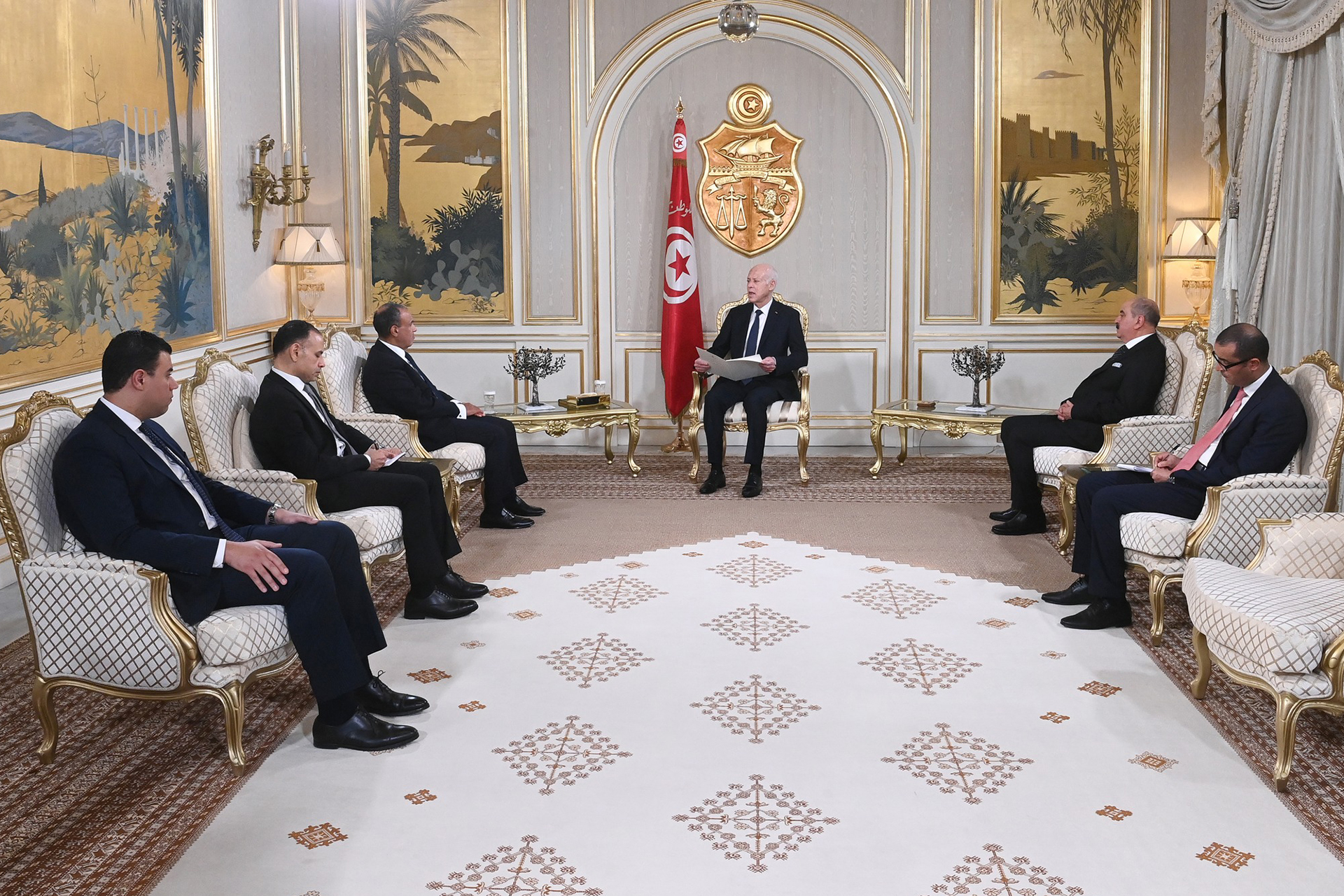
Tunisian President Kais Saied has proposed hosting a comprehensive conference for Libyan factions to reach a political settlement in the neighboring country. The offer was made during a meeting Monday with the Egyptian and Algerian Foreign Ministers, Badr Abdel-Aati and Ahmed Attaf, respectively.
President Saied emphasized that the situation in Libya is a “purely national issue,” stating that “the solution in this country can only be Libyan-Libyan.” He added that the current management of Libya since 2011 has failed to meet the aspirations of the Libyan people for security, unity, and stability.
He affirmed Tunisia’s readiness to host a comprehensive conference where Libyans can freely choose the solutions they deem appropriate, expressing confidence in their ability to shape their own future.
On Monday, the foreign ministers of Libya’s neighboring countries – Tunisia, Algeria, and Egypt – held consultations in Tunis regarding the situation in Libya as part of a tripartite consultation mechanism. The Special Representative of the Secretary-General of the United Nations in Libya, Hanna Tetteh, also participated.
It was stated that any arrangements or consultations related to Libya must involve the direct participation of the Libyan state through its Ministry of Foreign Affairs.
The United Nations is working on developing a political roadmap in Libya, which is currently divided between two governments in the east and west. The roadmap aims to lead to general elections and the establishment of stable governing institutions.
Libya has been experiencing political and institutional division since 2014, with the internationally recognized Government of National Unity, headed by Abdul Hamid al-Dabaiba and based in Tripoli, and the eastern government declared by the parliament in Tobruk, led by Aqila Saleh, which manages the affairs of the eastern region, alongside separate legislative councils and financial institutions. This deep division has become a prominent feature of the Libyan crisis and an obstacle to building unified and effective institutions. Tunisia hopes to play a pivotal role in fostering dialogue and achieving a lasting solution. The proposed conference aims to provide a platform for all Libyan parties to engage in constructive discussions and find common ground.