World Health Organization Praises President Tebboune’s Efforts
The Director-General of the World Health Organization (WHO), Tedros Adhanom Ghebreyesus, has praised the significant importance Algeria places on vital health sectors under the leadership of President Abdelmadjid Tebboune. He emphasized that these efforts have not only protected the health of Algerians but have also extended to benefit the entire African continent.
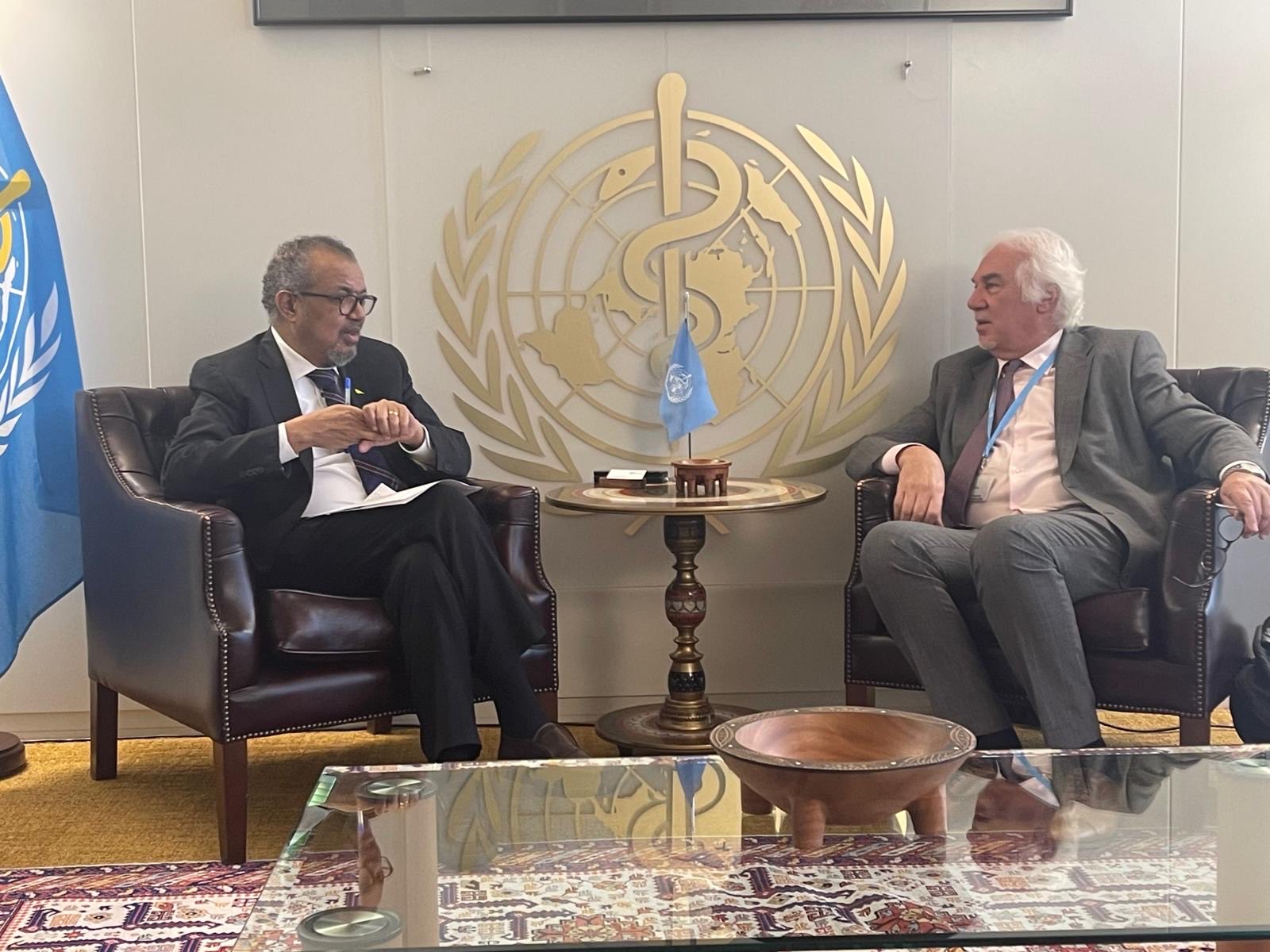
In a post on his official accounts, the Director-General noted the quality of discussions held with the President of the National Agency for Health Security, Kamel Sanhadji, on the sidelines of the 158th session of the WHO Executive Board in Geneva.
Ghebreyesus affirmed the strength of cooperation between the organization and Algeria, particularly regarding early warning systems for health emergencies and the localization of medical product manufacturing.
The meeting, attended by Ambassador Rachid Bladehane, Algeria’s Permanent Representative to the United Nations in Geneva, served as an important platform to discuss strengthening the strategic partnership in line with the organization’s general program of work (2025-2028).
Discussions focused on building resilient health systems capable of withstanding future challenges, with an emphasis on “preparedness and response” and cross-border “health surveillance.”
The issue of local production of medicines and health technologies also featured prominently. Algeria’s leadership in this field was highlighted, particularly following its organization of the ministerial conference on pharmaceutical production in Africa.
Both parties reviewed national efforts aimed at strengthening the pharmaceutical regulatory framework to achieve “Maturity Level 3” in international standards, reinforcing Algeria’s position as a rising medical industrial power.
The meeting concluded with the necessity of promoting “South-South” and triangular cooperation mechanisms to serve Sustainable Development Goals, specifically Goal 3 related to health and well-being, and to place Algerian expertise at the service of regional and international health security.
Reference: link