
Prevention of Corruption is a Civilizational Project Based on Citizen Awareness
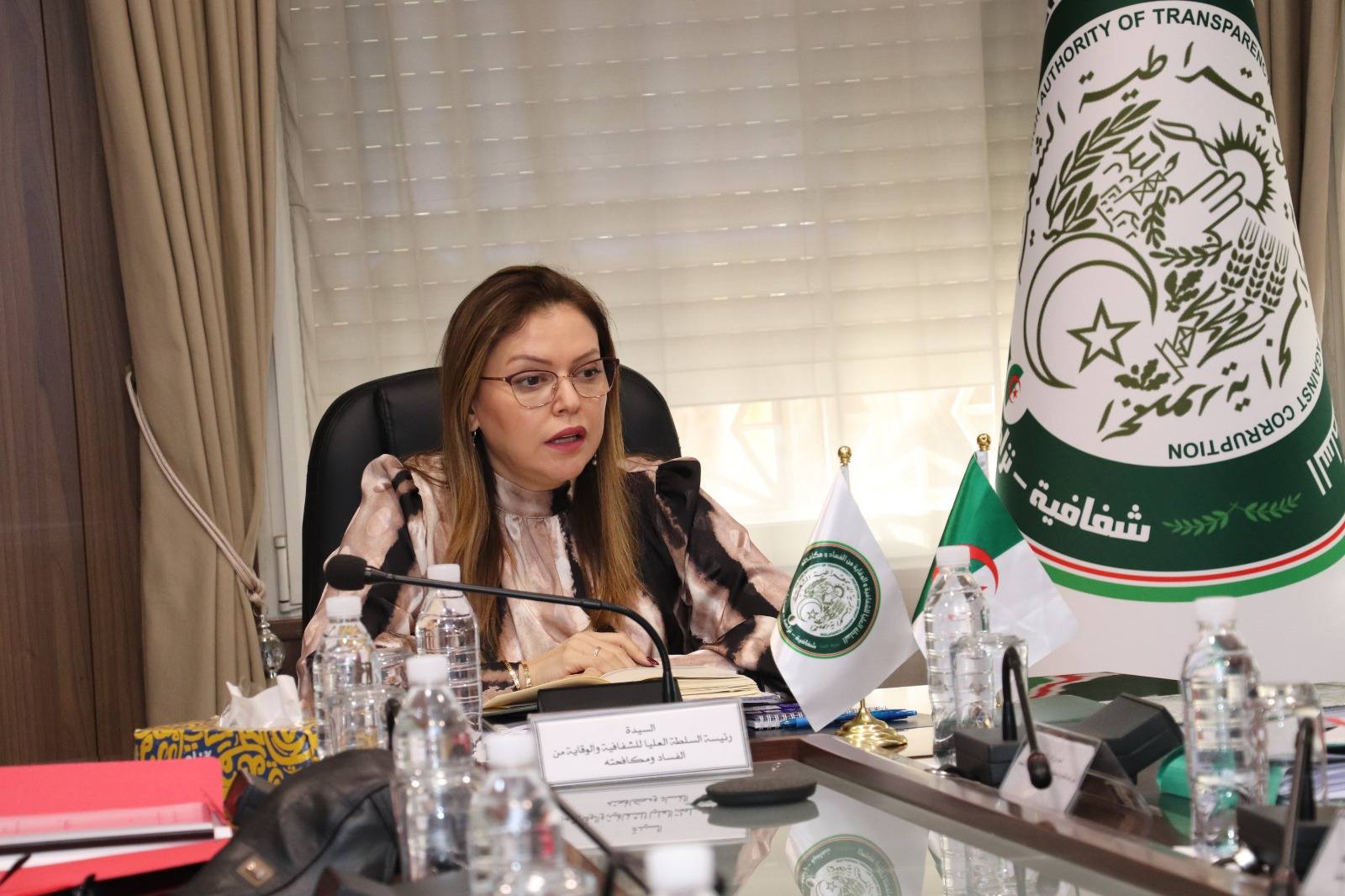
Salima Mesrati, President of the High Authority for Transparency, Prevention, and Combatting of Corruption, emphasized that the issue of preventing corruption is not merely an institutional matter or an abstract legal responsibility. Instead, she described it as a participatory civilizational and ethical project based on citizen awareness before legal strictness, conscience before procedure, and education before punishment.
This statement was made during her speech on Thursday at the official opening of a remote interactive training session titled “Consolidating Transparency and Integrity and Enhancing the Culture of Reporting Corruption,” held at the Ministry of Youth headquarters.
The speaker explained that this training session, themed “Consolidating Transparency and Integrity and Enhancing the Culture of Rejecting Corruption or Reporting Corruption,” is central to the implementation of the National Strategy for Transparency, Prevention, and Combatting of Corruption. It specifically aligns with the strategy’s second objective and measure number 24, which concerns raising youth awareness and spreading a culture that rejects corruption.
She added that youth represent the central link in building a society that rejects all forms of deviant behavior related to corruption. She noted that by establishing this conviction and unified vision regarding the centrality of values and the power of youth effectiveness, young people transition from being a target group for awareness-raising to becoming key actors in creating awareness and spreading a culture of integrity and transparency.
Mesrati stressed that youth awareness constitutes the first line of defense against behavioral deviations and serves as a strong barrier protecting the nation from all illegal practices.
She also called on young people to engage in available clubs and awareness-based or human rights associations, organize awareness campaigns within university circles, and utilize social media to spread a positive discourse that reinforces the culture of rejecting corruption.
Mesrati recommended that youth commit to the values of work and responsibility while reporting any deviation or suspicion of corruption through available channels and in accordance with established legal procedures.