Gaza Agreement Stalled: Disarmament a Condition or Pretext?
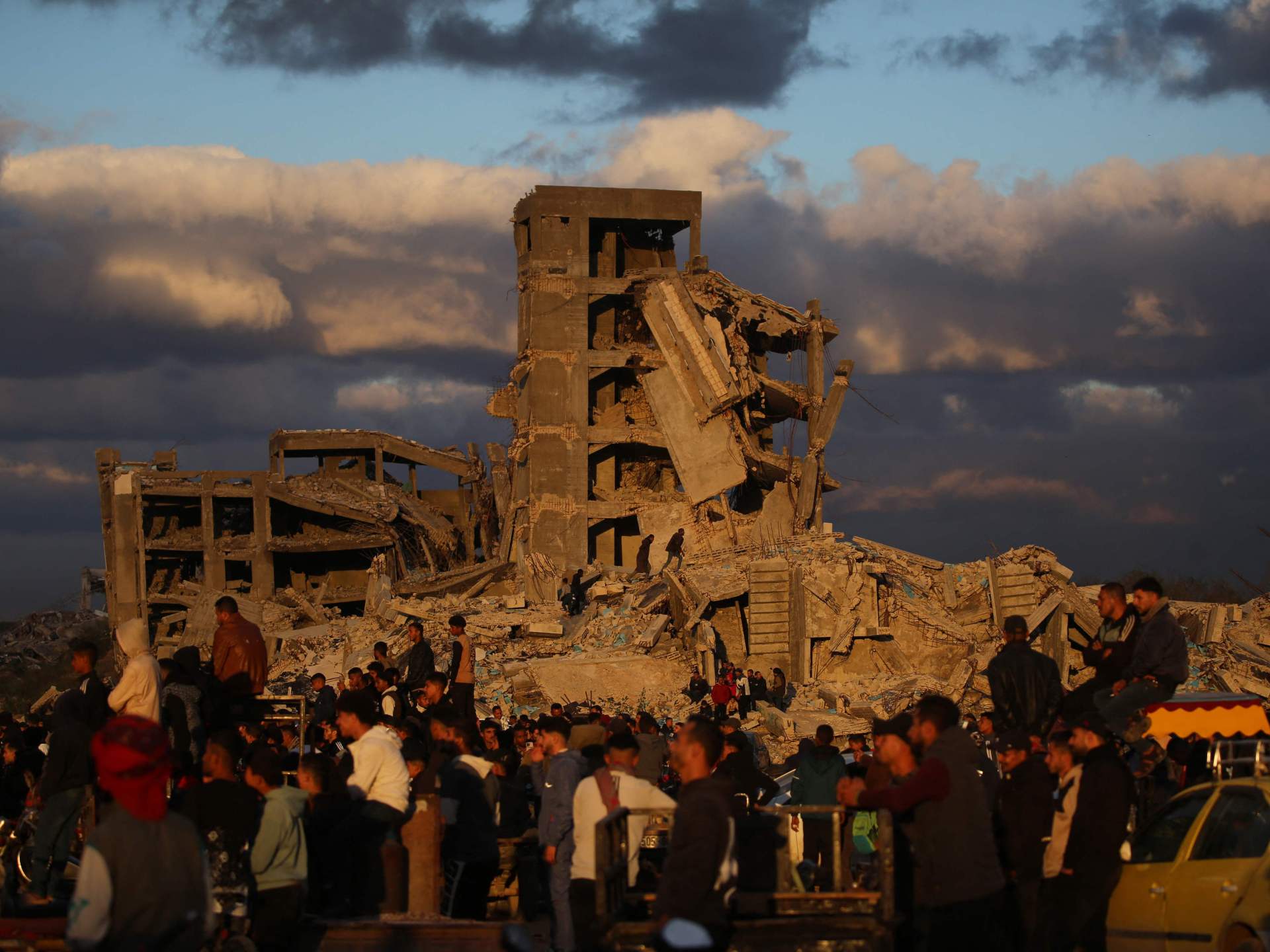
Progress towards the second phase of the Gaza agreement remains stalled, despite the considerable time that has elapsed since the implementation of the initial phase began. There are growing indications that the impasse is less technical and more closely tied to Israeli domestic calculations and the stringent conditions being presented for the agreement’s completion.
According to Adel Shadeed, a researcher specializing in Israeli affairs, Israel finds itself caught between two untenable options: a return to a full-scale war, which the American position does not permit, or full adherence to the ceasefire, with its associated domestic political costs. Shadeed, speaking on the program ‘Path of Events,’ suggests that the government of Benjamin Netanyahu is resorting to managing this ‘grey area’ through limited operations and calculated violations, allowing it to maintain the pretense that the war has not ended.
He argues that the current Israeli government is unable to admit the failure to achieve the war’s objectives, particularly as Israel enters an election year. Simultaneously, it fears that transitioning to the second phase could lead to the disintegration of the ruling coalition. Therefore, maintaining the status quo in Gaza becomes a less politically costly option.
Shadeed believes that Israel’s insistence on the disarmament of resistance factions stems not solely from security considerations but from a broader political objective: to strip the Gaza Strip of light weapons, creating internal chaos. He contends that Israel seeks to disarm Hamas, while simultaneously attempting to arm militia groups, leading to the disintegration of the internal structure of Gazan society and pushing it towards collapse, ultimately serving a displacement agenda.
He concludes that the second phase is unsettling for Israel because it carries political dimensions that go beyond the security and humanitarian approach it has traditionally imposed on the Gaza Strip. These dimensions include withdrawal, the opening of crossings, and the commencement of reconstruction, explaining the Israeli procrastination.
On the political front, Turkish Foreign Minister Hakan Fidan reportedly told a delegation from Hamas that the transition to implementing the second phase could occur in the early weeks of 2026.