The Pope’s Visit: A Symbolic Moment to Recognize Algeria’s Historical Role
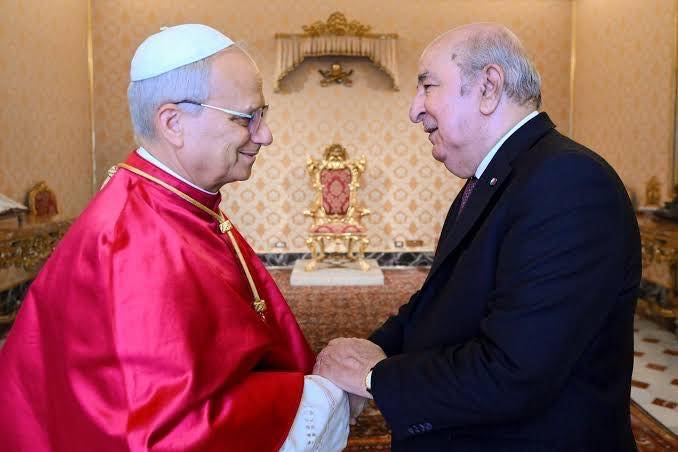
The visit of His Holiness Pope Leo XIV to Algeria, announced by the Vatican on Wednesday, represents a historical milestone with deep religious, cultural, and diplomatic dimensions. It carries great symbolism, confirming Algeria’s role in shaping part of the spiritual and intellectual history of the Mediterranean and the African continent. Annaba is expected to be at the heart of the upcoming visit, scheduled between April 13 and 15, as the city witnessed the most important stage of Saint Augustine’s intellectual and spiritual life. He served as the Bishop of Hippo and wrote his most prominent works there, which deeply influenced the course of Western Christian thought.
Augustine is the spiritual father of Pope Leo XIV, who stated after his inauguration as head of the Catholic Church in May 2025 that he is “Augustinian in approach.” With this, the new Pope revived the memory of Saint Augustine, one of the greatest Christian figures to emerge from Algerian soil. Saint Augustine is one of the most prominent figures in Christian and philosophical thought in history; he was born in the city of Souk Ahras and lived a large part of his life in Annaba, which houses a large church bearing his name.
The words of the new Pope sparked a wave of global and regional interest in Augustine, who lived 16 centuries ago in Algeria and influenced Western Christian thought with his theological and philosophical ideas. This interest highlights Algeria’s ancient history as a meeting point for civilizations and cultures, with the upcoming visit serving to reconnect the highest Christian authority with the land of Algeria.
The return of the Pope to Algeria, and specifically to Annaba, represents a symbolic moment that reconnects the present with the shared Mediterranean past between Algeria and Europe. It reaffirms the recognition of Algeria’s historical role in shaping part of Western Christian thought. Algeria was not on the margins of history but was an active space for knowledge production. Through the invitation extended by President Abdelmadjid Tebboune to the Pope, the Algerian state presents a balanced approach to this heritage, considering the shared human legacy as an element of strength and integration rather than a source of conflict or division.
This visit also comes in a sensitive international context, where some voices abroad attempt to portray Algeria as an internationally isolated country. However, receiving a global spiritual figure of the Pope’s stature confirms the opposite and highlights Algeria’s position as a cultural and diplomatic actor strongly present in the Mediterranean and African spheres.
The visit also provides an opportunity to enhance Algeria’s image as a moderate and balanced actor on the international stage, especially in light of challenges related to identity, religion, and the rise of extremist discourse. It reflects the strength of relations between Algeria and the Vatican and confirms the existence of common ground for dialogue and understanding. Invoking the legacy of Augustine in Annaba symbolizes this historical extension that links Algeria to Europe within a shared civilizational framework.
In a world where soft power has become a decisive element in international relations, this visit could constitute a strategic opportunity to enhance Algeria’s cultural presence internationally. The global attention accompanying the visit highlights Algeria’s historical and religious heritage and opens the way for long-term cultural, tourism, and intellectual investment.