Jijel’s Djen Djen Port Breaks Geographic Barriers: Algeria Opens Mediterranean Gateway for Sahel Nations
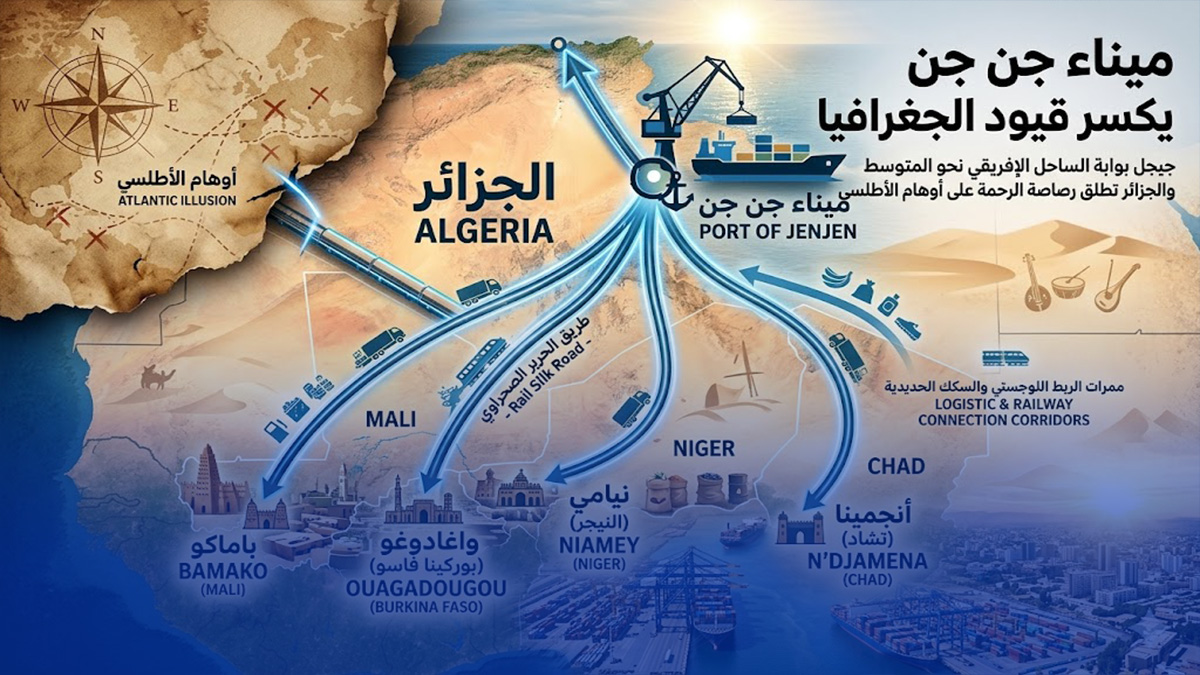
In a pivotal geo-economic shift, Algeria is redrawing the map of commercial influence across Africa, transforming its massive infrastructure into continent-wide sovereign assets. Algeria has officially placed the world-class Djen Djen Port in Jijel at the disposal of Chad and Sahel nations — a strategic move that goes far beyond customs facilitation to establish a solid North-South axis, ending decades of geographic isolation for landlocked African states.
During joint Algerian-Chadian commission proceedings, Foreign Minister Ahmed Attaf told dzwatch that Algeria delivers real logistical solutions, not empty promises. Djen Djen Port, capable of receiving the world’s largest vessels, offers N’Djamena, Niamey, and Bamako sovereign Mediterranean access, freeing their economies from dependency on distant foreign ports or neo-colonial pressure.
Algeria’s offer rests on three pillars: the Trans-Saharan Highway connecting Algeria to Lagos, expanding southern railway networks slashing freight costs, and free trade zones in border regions serving African markets directly.
While Morocco’s regime promotes an Atlantic initiative lacking basic logistical infrastructure — rough roads, vast distances, zero rail connectivity, and foreign-conditioned financing — Algeria’s initiative stands as the natural, sovereign choice. Experts told dzwatch that the warm reception of Chadian FM Abdallah Saber Fadl signals regional recognition that Africa’s prosperity runs through Algeria.
President Tebboune’s Sahel policy replaces pure security approaches with comprehensive development — proof that Algeria remains Africa’s true locomotive.