















Europe Records Over 10,000 Excess Deaths During Record-Breaking June Heatwave
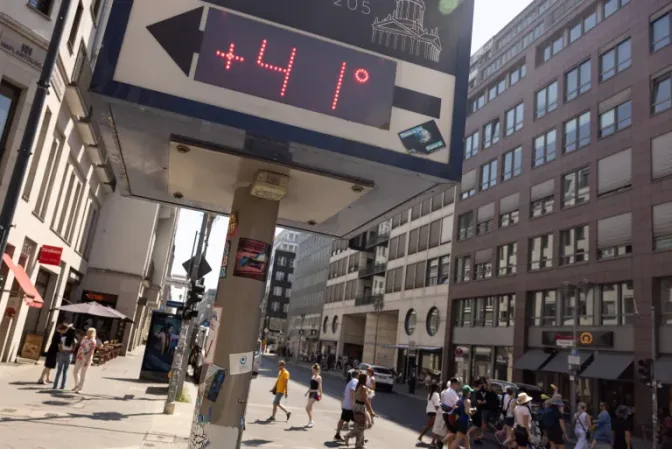
European countries recorded more than 10,000 excess deaths during the record-breaking heatwave that swept across the western part of the continent in late June 2026, according to official mortality data.
The figures, compiled from national statistics covering 27 European countries, showed that more than 9,000 of the additional deaths involved people aged 65 and above, highlighting the particular vulnerability of older adults to extreme temperatures.
The sharp rise in mortality occurred mainly during the week of June 22–28, when the heatwave reached its peak in France, Spain, the United Kingdom and several other European countries.
The figures represent excess deaths from all causes, meaning the number of deaths recorded above the level normally expected during that period. Although not every case can be directly attributed to heat, health experts said there was no other clear explanation for such a significant increase.
Lasse Vestergaard, a senior physician at Denmark’s Statens Serum Institut, said it was difficult to explain the unusually high mortality by anything other than the extreme heat.
High temperatures can cause serious conditions such as heat exhaustion and heatstroke. They can also worsen existing cardiovascular and respiratory illnesses, especially among older people and individuals with chronic health problems.
The late-June heatwave also disrupted electricity supplies, forced school closures and placed additional pressure on healthcare systems and public infrastructure. Temperature records were broken in several parts of Western Europe.
The European Union’s Copernicus Climate Change Service confirmed that June 2026 was the hottest June ever recorded in Western Europe. Globally, it was the second-warmest June on record, while sea-surface temperatures reached their highest level ever measured for the month.
Climate scientists said the extreme temperatures experienced in late June would have been virtually impossible without human-caused climate change. The continued accumulation of greenhouse gases in the atmosphere is making heatwaves more frequent, longer-lasting and more intense.
The latest figures have renewed calls for European governments to strengthen heat-warning systems, protect vulnerable populations and adapt homes, hospitals, energy networks and public spaces to increasingly severe summer temperatures.
For more information, visit dzwatch.dz.