

African Union Peace and Security Council Reviews Growing Challenges in the Sahel
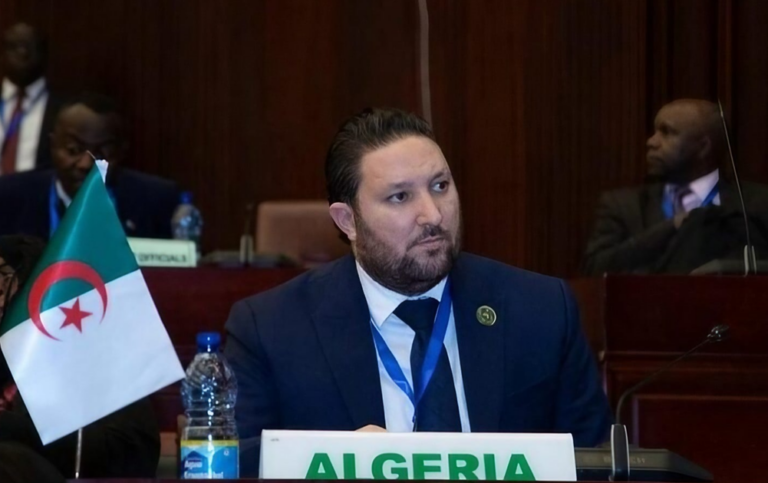
The African Union Peace and Security Council, under Algeria’s presidency, held a meeting to review the latest political, security, humanitarian, economic, and social developments across the Sahel region.
The session provided an opportunity to assess efforts to combat terrorism and transnational organized crime while strengthening state institutions, peace, and sustainable development. African Union Commissioner for Political Affairs, Peace and Security Bankole Adeoye and UN Special Representative for West Africa and the Sahel Leonardo Santos Simão presented regional and international initiatives based on cooperation, respect for national sovereignty, and addressing the root causes of instability.
The meeting was preceded by a coordination session bringing together Sahel countries and neighboring states to exchange views on current developments.
Algeria’s Ambassador and Permanent Representative to the African Union, Mohamed Khaled, warned that the Sahel is facing worsening security and humanitarian challenges, including terrorism, organized crime, food insecurity, humanitarian crises, and irregular migration.
He stressed that stability in the Sahel is closely linked to security across Africa and welcomed renewed efforts by countries in the region to strengthen cooperation with neighboring states.
The Council called for continued constructive dialogue with Sahel authorities and stronger coordination between the African Union, member states, and regional organizations. Priorities include improving intelligence sharing, strengthening border security, developing joint operations, and enhancing early-warning and conflict-prevention mechanisms.
It also called for intensified efforts to combat violent extremism and disrupt terrorist financing, while increasing humanitarian assistance for displaced people, refugees, and host countries.
The Council urged African and international financial institutions and development partners to support economic recovery and resilience programs. It emphasized the need to address poverty, unemployment, food insecurity, and the growing effects of climate change.
The meeting concluded that lasting peace in the strategically important Sahel region requires stronger regional cooperation, effective governance, and a comprehensive approach combining security, development, and institutional stability.


9 Comments