Sudan War’s Missing: Families Devastated in Kordofan
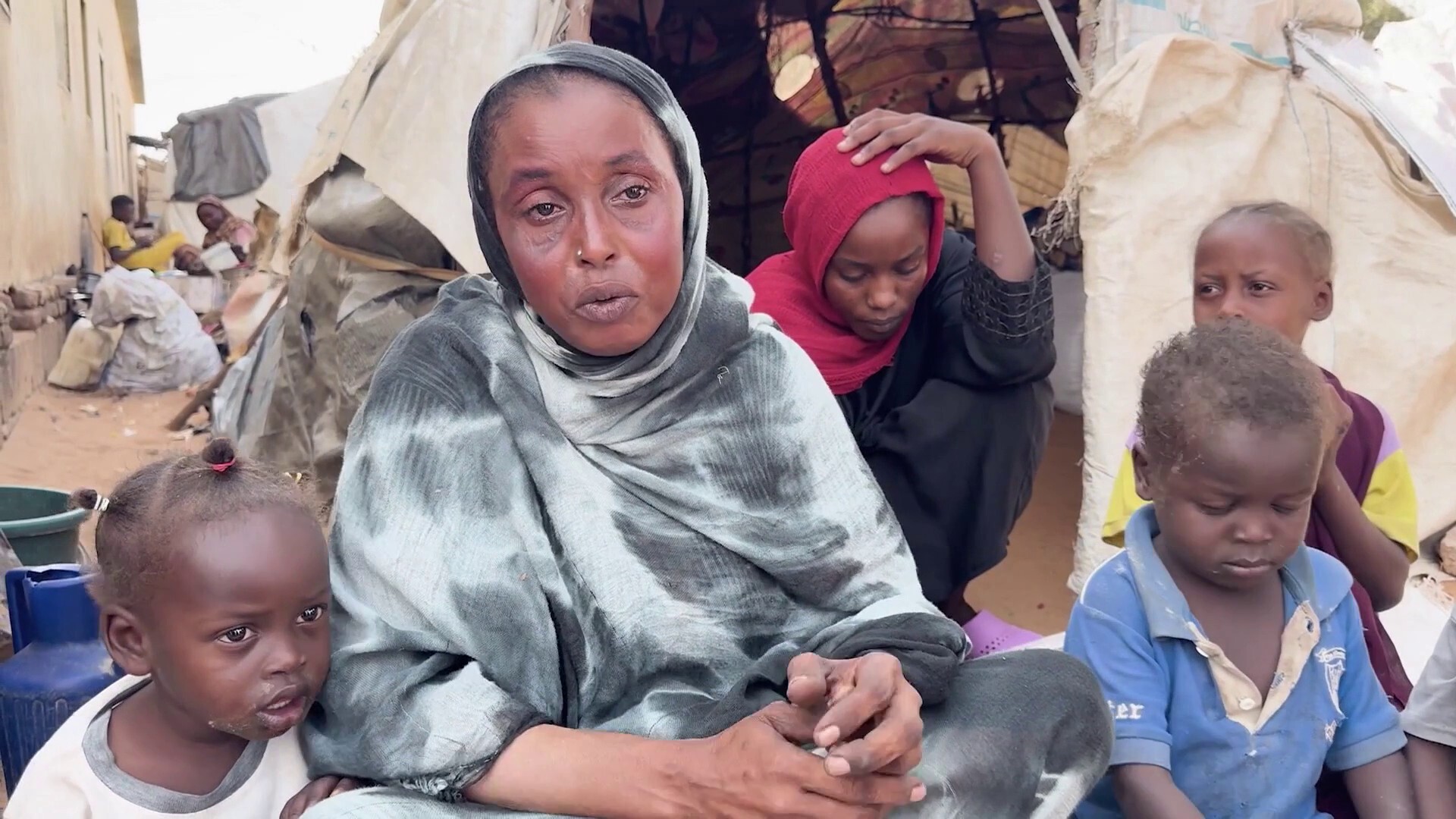
In a forgotten corner of North Kordofan, Sudan, where the lines between displacement and loss blur, sit Sudanese women twice victimized by war. First, their homes were stolen, and then their loved ones were swallowed by the unknown. The tents here tell tales not only of hunger and thirst but echo with the heavy silence of mothers and wives awaiting the return of those who remain only as names in memory and solitary photographs.
Khadija sits heavily burdened in front of her tent, her refuge after forced displacement. She lost her husband and several family members, finding herself alone to face the future with eight children entirely dependent on her. Khadija recounts her ordeal, her voice breaking, “We suffered unspeakably. We fled the hell of battles in Babnusa to Al-Fula, and from there, fate cast us here.”
But displacement was not the end. The real tragedy lies in the disappearances. “We miss the father, the brother, and my daughter’s husband, for whose release the kidnappers are demanding an exorbitant ransom. We have no news or trace of my father,” she adds.
Khadija is not alone in this desolation. In every tent, there is sorrow, and for every displaced person, a story of forced disappearance. Um Shreim speaks of the single photograph of her missing daughter, clutching it as a lifeline. She says she holds only one simple wish, impossible to fulfill: “I just want to know where she is. Is she still alive?”
Nearby, Azza stares longingly at her brother’s features in a silent picture. Beside her sits his young child, sharing with his aunt the bitterness of waiting. “We lost my brother since Friday,” Azza says. “This is his child sitting with us, waiting. No news, no contact, nothing to reassure us.”
The tragedy in North Kordofan extends beyond individual stories. The number of missing persons continues to rise, leaving entire families in agonizing uncertainty. The conflict has created a humanitarian crisis where the search for the missing adds another layer of despair to an already dire situation. The need for support and resources for these families is critical. DZWatch continues to monitor the situation and will provide updates as they become available.