











Asia Djebar Grand Prize for the Novel: ANEP Unveils the 2026 Longlist
Algiers — August 19, 2026
The National Agency for Communication, Publishing and Advertising (ANEP) unveiled on Wednesday the longlist for the eighth edition of the Asia Djebar Grand Prize for the Novel, bringing together 26 works written in Arabic, Tamazight and French.
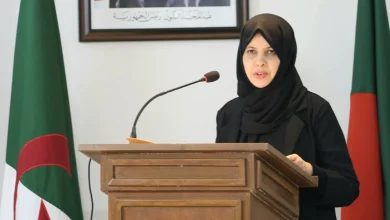
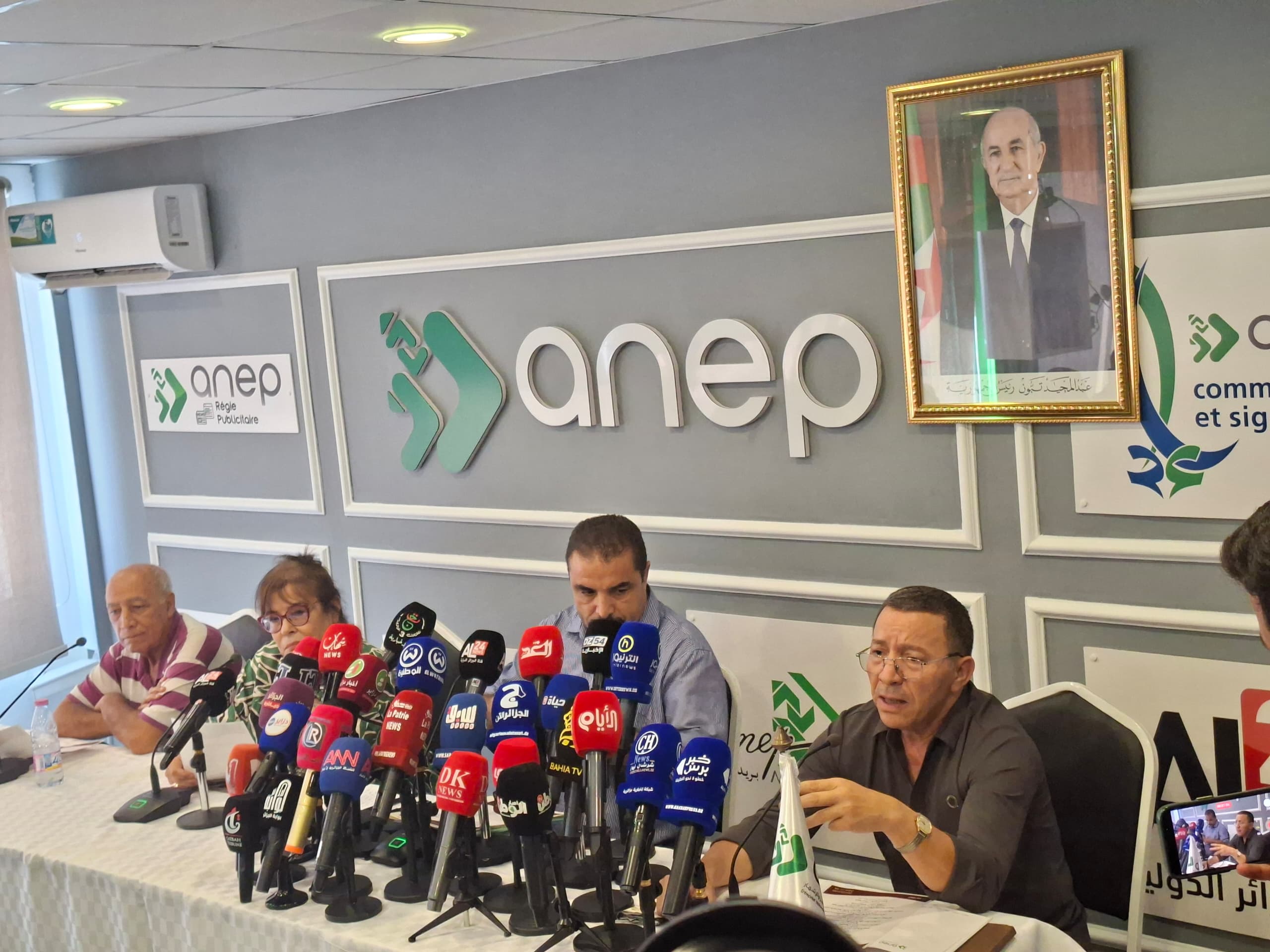
The announcement was made during a press conference held at ANEP’s headquarters in Algiers, in the presence of members of the jury. More than a literary announcement, the event offered a snapshot of the vitality and diversity of Algeria’s contemporary novel, while placing ANEP once again at the heart of a major national cultural gathering.
155 novels, 53 publishers
According to Hakim Miloud, chairman of the jury, the 2026 edition attracted 155 novels submitted by 53 Algerian publishing houses.
The submissions included 79 novels in Arabic, 13 in Tamazight and 63 in French. Following the evaluation process, the jury selected 26 works for the longlist: 10 in Arabic, six in Tamazight and 10 in French.
The figures are significant not only for the scale of participation, but also for what they reveal about the breadth of Algeria’s literary production. Three languages, distinct literary traditions and a wide range of voices have converged within a single prize carrying the name of one of Algeria’s most internationally recognized writers.
Miloud described the selected works as particularly diverse in both themes and approaches. History, biography, the memory of places, psychological narratives, experimental writing and elements of the fantastic all feature among the works retained by the jury.
Three languages, one literary landscape
The Arabic-language longlist includes works such as “Arous Al-Dam” (Blood Weddings) by Hussein Allam, “The Only Letter… Perhaps the Last” by Amalia Friha, “Al-Rafraf: A Biography of the Mountain, the Legend” by Sara Mohamed Maârish, and “Tahnan: The Spring, the Mountain and the Blue Sapphire” by Leila Tebani.
The list also includes “Iman: The Spider That Became a Flower” by Ahmed Dalil, “Shadows of Kouri and Wings of Hope” by Mubarak Balnaoui, “Bouya II: The Brides of the Qaysariya” by Fadila Melham, “The Year of the Flower” by El-Kheir Chouar, and “Madame Marie’s Apartment” by Souria Madi.
The Tamazight longlist comprises six works: Tasrit tis tesɛa by Said Ali Cherifi, IYsi N Wurey by Dahia Hamitouche, D Asderfet by Chehba Ben Gana, TiYri n Tudert by Siham Harikncheikh, AGGUS by Farida Sahoui, and Akud I Tudert, Tagnit I Tayri by Djamel Banaouif.
The French-language selection features ten novels, including Un olivier au clair de lune by Belàld Abane, Partout le même ciel by Hajar Bali, Écris et je viendrai by Meryem Belkaïd, L’héritage du silence by Manel Benchouk, and Marjane by Malika Chitour Daoudi.
The remaining titles are Aménorrhée by Sarah Haidar, Ce que la mort m’a pris de toi by Hosni Kitouni, La femme qui écoutait la montagne by Rachid Oulebsir, Samovar (une conquête algérienne) by Keltoum Staali, and La Footballeuse by Nadjib Stambouli.
ANEP and the institutional life of literature
The significance of Wednesday’s gathering extends beyond the announcement itself.
By hosting the press conference at its headquarters, ANEP positioned itself as an institutional platform for the visibility of Algerian literary creation, bringing together authors, publishers, jury members and the national media around one of the country’s most prominent literary prizes.
That role is particularly relevant for a prize whose defining characteristic is linguistic plurality. Arabic, Tamazight and French are not treated as competing literary spaces, but as three expressions of a broader Algerian literary landscape.
In this sense, the Asia Djebar Prize does more than reward a novel. It provides an institutional framework through which the diversity of Algeria’s literary production can be identified, evaluated and brought to wider public attention.
A prize bearing a powerful name
Established in 2015, the Grand Prize is named after Assia Djebar (1936–2015), the Algerian novelist, academic and internationally acclaimed writer whose work crossed linguistic, cultural and geographical boundaries.
The prize seeks to promote Algerian literary creation and contribute to its recognition both nationally and internationally. Its multilingual structure is also a reflection of the complexity and richness of the country’s literary heritage.
The 2026 jury is composed of ten academics, novelists and specialists in literature, translation and sociology. It is chaired by Hakim Miloud, with Mustapha Madi, Hamid Bouhabib, Maïssa Bey, Cherif Meribai, Meriem Kacham, Leïla Hamoutane, Ahcene Maârish, Kessila Aliq and Idir Belali serving as members.
The road to October
The announcement of the longlist marks only the first major stage of the competition. The 26 selected novels will now proceed through further evaluation before the winners are announced on October 8, 2026.
For ANEP, however, the significance of the event lies beyond the final prize.
The longlist offers a rare collective portrait of contemporary Algerian fiction: Arabic, Tamazight and French; historical memory and personal experience; places, identities, psychological worlds and literary experimentation.
And in bringing these voices together under the name of Assia Djebar, ANEP is helping turn a literary competition into something larger — a public showcase of the continuing evolution, plurality and creative strength of Algerian literature.