















Global Maritime Shifts Feature Djen Djen Port Operations
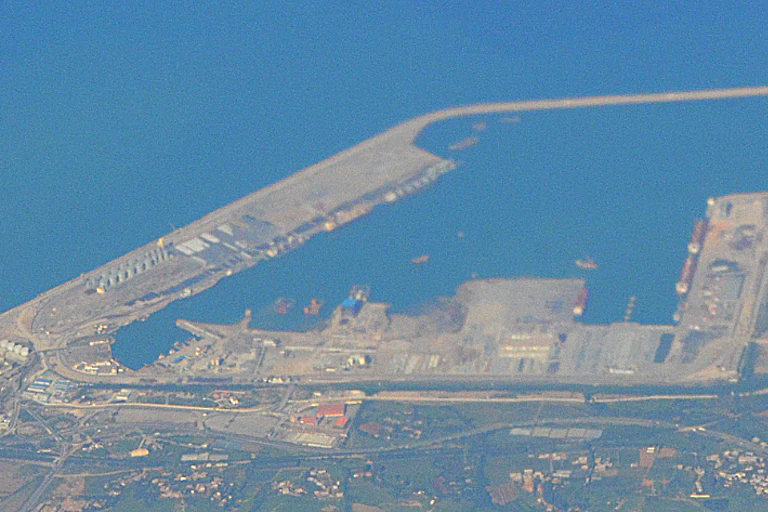
On January 25, 2026, Algeria's Djen Djen port achieved its first national transshipment operation. Located strategically between the Suez Canal and the Strait of Gibraltar, this operation established the port as a significant international passage point for global maritime flows, even for goods not destined for the Algerian market. For instance, the port facilitated the transfer of 200 twenty-foot equivalent units (EVP) from the Xin Yong Chang 19, originating from China, to another vessel bound for Saint Petersburg, Russia. These containers transited without entering Algeria's import customs circuit, highlighting Djen Djen's function as a dynamic relay and a break-bulk point within the Mediterranean network.
The port's strategic development aligns with an objective to become a major Mediterranean transshipment platform. Since 2009, Emirati port and logistics operator DP World has managed Djen Djen under a thirty-year concession as part of an Algerian-Emirati joint venture. This partnership leverages Djen Djen's geographical advantage, situated less than 50 nautical miles from the main Suez-Gibraltar maritime route. Significant infrastructure expansions have also been undertaken, enabling the terminal to accommodate container ships with a maximum capacity of 6,000 EVP, an increase from 2,500 EVP, and raising the draught to fourteen meters. Despite the operational joint venture, the port unequivocally remains Algerian.
Djen Djen's role extends to broader shifts in global maritime routes. The port has hosted the Istanbul Bridge, the largest container ship ever received in an Algerian port, which previously inaugurated the Arctic service of Sea Legend, a Chinese-controlled container shipping company. This dual connection positions Djen Djen at the intersection of Mediterranean and Arctic maritime dynamics. Beyond merely being a destination, the port now actively redistributes containers to other global destinations, further solidifying its emerging importance as a flexible and pivotal logistical hub in the evolving landscape of international maritime trade.