










Algeria Launches National Agricultural Information System to Strengthen Data-Driven Governance
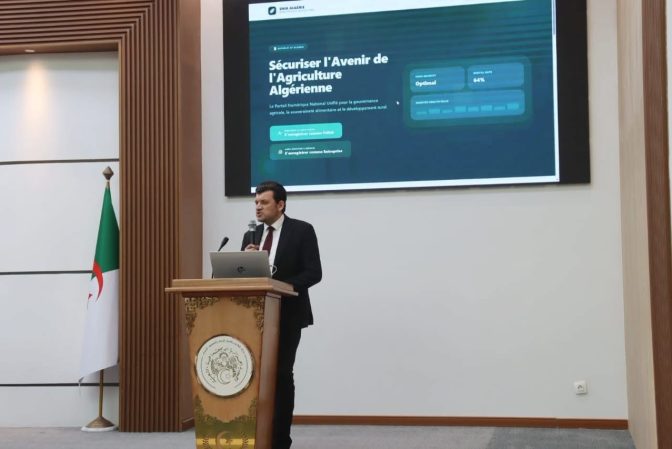
Algeria’s Minister of Agriculture, Rural Development and Fisheries, Yacine Oualid, officially launched the National Agricultural Information System, a digital platform designed to provide reliable and up-to-date data on the country’s agricultural sector. The initiative aims to improve governance and support informed decision-making at both the central and local levels.
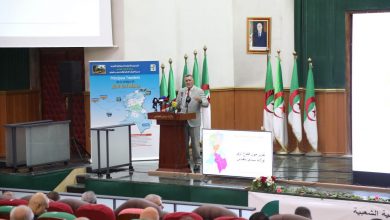
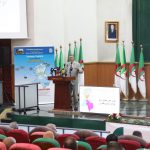
According to the Ministry of Agriculture, the system was developed by a team of young Algerian experts and was unveiled during a national meeting attended by senior ministry officials, regional agricultural directors, research institute representatives, managers of public economic groups, supervisory agencies, and members of the National Scientific Council for Food Security.
Speaking at the event, the minister highlighted the strategic importance of the new platform, noting that it will enable more accurate data collection, management, and analysis. The system is expected to shift the sector from approximate management practices to a scientific, data-driven approach based on reliable information.
The platform centralizes agricultural data across various activities, ensuring secure data management while allowing authorities to collect, update, process, analyze, and use information to support policy planning and operational decisions.
Implementation will take place in successive phases. The system will include a central dashboard for national decision-makers and dedicated operational interfaces for regional agricultural directorates and local administrative offices.
The first module introduced focuses on monitoring the national grain harvest and threshing campaign. It enables the daily collection and analysis of field data, helps address operational challenges such as shortages of harvesting equipment, and allows grain producers without farmer identification cards to market or store their crops at the National Cereals Office’s storage facilities.
The module also tracks harvested areas by region and crop type, monitors production levels through field reports, and provides detailed statistics and performance indicators to facilitate timely decision-making.
The ministry announced that additional modules will be introduced gradually. These include a National Agricultural Registry to establish a reliable reference database, an Agricultural Land Registry for monitoring farmland and soil fertility, and a Livestock Management System to oversee herd populations, vaccination programs, and animal identification nationwide.
Other planned components include systems for monitoring agricultural support programs, tracking the distribution of seeds, fertilizers, and other agricultural inputs, managing agricultural financing and loans, and overseeing agricultural insurance coverage against risks such as drought, disease, and production losses.
The platform will also feature market monitoring tools to track wholesale and retail prices, water resource and climate monitoring systems to assess rainfall, drought conditions, reservoir levels, and water stress, as well as dedicated modules for fisheries, aquaculture, forestry, and environmental management.
In addition, the system incorporates an early warning and crisis management platform capable of monitoring strategic risks—including food security threats, epidemics, and droughts—in real time while activating emergency response protocols. A unified digital portal will also simplify and digitize administrative procedures across Algeria’s agricultural sector.