





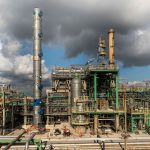










Seawater Desalination a Core Pillar for Water Security

Professor Najib Darwish, Director of Research at the Semiconductor Technology Research Center, highlighted reverse osmosis (RO) technology as a critical element in Algeria's national water security strategy. This approach focuses on diversifying water sources and ensuring public health through the conversion of seawater into high-quality potable water. Desalinated water currently constitutes 42% of Algeria's drinking water supplies, a figure projected to increase to 60% by 2030.
Reverse osmosis is a widely adopted technology that transforms seawater into fresh water using thin, semi-permeable membranes. These membranes effectively retain most dissolved salts, ions, microorganisms, and other pollutants, making the water suitable for human consumption and public health assurance. Professor Darwish noted that Algeria's existing desalination plants produce approximately 3.7 million cubic meters of water annually. A key advantage of RO technology is its relatively low energy consumption, typically ranging between 3 and 4 kilowatt-hours per cubic meter of water produced, a significant improvement over previously used thermal processes.
The suitability of reverse osmosis for Algeria is underscored by its extensive coastline and the variability of its traditional water resources. Seawater desalination allows the nation to diversify its water sources and reduce dependence on rainfall and surface water. However, Professor Darwish emphasized that desalination should be an integral component of a comprehensive and sustainable water management strategy, rather than a singular solution. This broader strategy includes measures such as minimizing water loss in distribution networks, reusing treated water, safeguarding groundwater, and enhancing the efficiency of water demand management. Further recommendations include sustainable solutions for saline brine management, investing in local scientific research and equipment, and developing national expertise to mitigate technological dependence and operational costs.