















Sheikh Al Qasimi Al Hasani Promotes Dialogue, Security in Algiers
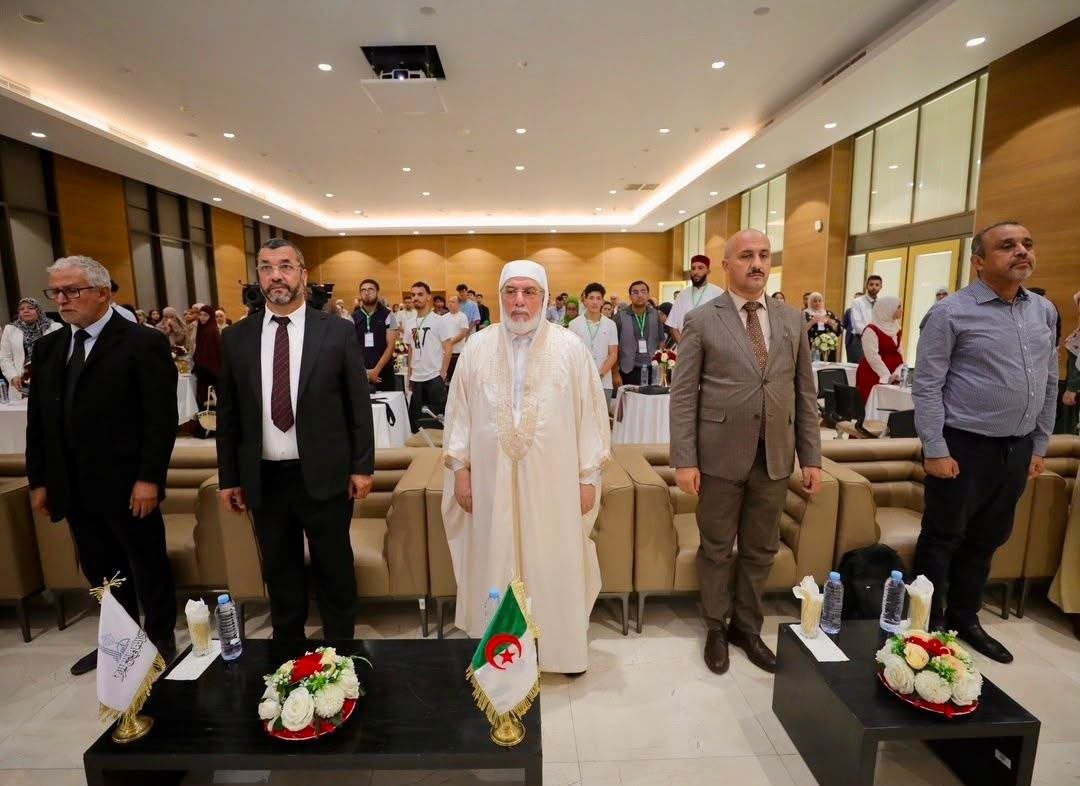
Sheikh Mohamed Maamoun Al Qasimi Al Hasani, Rector of the Great Mosque of Algiers, emphasized the significance of drawing values from the Prophetic Biography to strengthen dialogue, tolerance, security, and stability within Algerian society. His remarks were made on Thursday in Algiers during the inauguration of an interactive scientific council, organized under the theme “Prophetic Biography: Scientific Visions and Civilizational Horizons” in celebration of the month of lights.
During the session, Sheikh Al Qasimi Al Hasani asserted that a comprehensive reading of the Prophetic Biography should extend beyond merely recalling events to discerning its profound human and civilizational implications. He highlighted its capacity to provide values relevant to contemporary human experience, explaining that the Prophetic Biography serves as a vital source for translating religious principles into constructive social and civilizational conduct. This approach, he noted, significantly fosters mutual understanding and upholds human dignity. The Rector further stressed the importance of cultivating a culture of dialogue, active listening, and mutual respect, which he described as essential for building bridges of understanding across diverse religions, cultures, and civilizations. He affirmed that differences should be viewed as opportunities for deeper understanding and cooperation.
The Rector also drew a connection between the lessons of the Prophetic Biography and Algeria’s own historical journey, particularly the Algerian Revolution. He stated that honoring the sacrifices of martyrs and mujahideen necessitates transforming memory into a sense of responsibility, values into practical behavior, and history into a conscious foresight for the future. In this context, Sheikh Al Qasimi Al Hasani reflected on the meanings inherent in the National Day of the Mujahid, which commemorates the North Constantine attacks and the Soummam Congress (August 20, 1955/1956). He concluded by advocating for the Prophetic Biography as a wellspring for generating awareness, for national memory to serve as a bedrock of loyalty, and for dialogue to function as a crucial means of fostering understanding between individuals and civilizations.