






Italian Saipem, Chinese CHEC Awarded Phosphate Development Deals
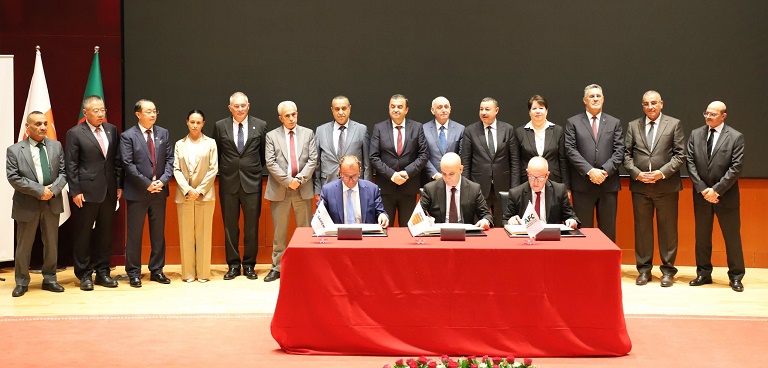
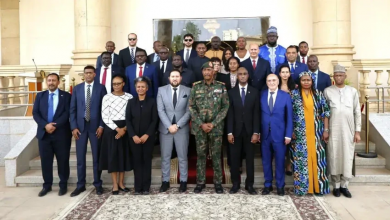
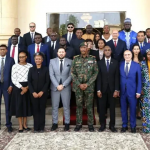
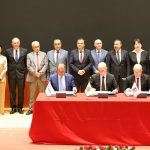
Sonatrach and the Algerian Fertilizers Company (AFC) have formally entered into two Engineering, Procurement, and Construction (EPC) contracts with international partners, Italian Saipem and China Harbour Engineering Company (CHEC). These agreements, signed in Algiers, represent the first phase of Algeria's integrated phosphate project. The signing ceremony was attended by several government ministers, including Mohamed Arkab, Minister of Hydrocarbons, along with the Italian and Chinese ambassadors to Algeria, underscoring the strategic importance of this development.
Minister Arkab highlighted that these contracts are a crucial step towards the concrete implementation of a project that holds particular attention from President Abdelmadjid Tebboune. The initiative is designed to valorize Algeria's natural resources, strengthen national industry, create added value, diversify the national economy, and boost non-hydrocarbon exports. The first contract, awarded to Saipem under an EPC Fast Track formula, covers the installations for the integrated phosphate project in Bled El Hadba, Tébessa wilaya, and Oued Keberit, Souk Ahras wilaya. The second contract, assigned to CHEC, focuses on the port infrastructure at Annaba.
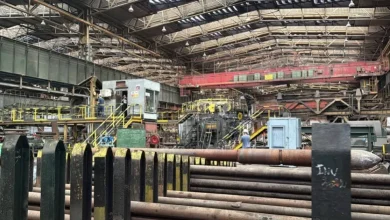
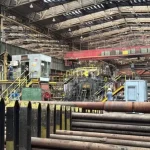
This integrated system is set to connect the Bled El Hadba deposits, the Oued Keberit transformation units, and the Annaba port infrastructure. It aims to transition Algeria from simple raw material valorization to the production and commercialization of high-value-added products. The industrial scheme begins with phosphate extraction and enrichment at Bled El Hadba, followed by chemical and industrial transformation at Oued Keberit to produce phosphatic and nitrogenous fertilizers and intermediate products. These will then be transported by rail to Annaba for export to national, regional, and international markets.
Production is projected to commence rapidly, with the first quantities of concentrated phosphate expected in the first quarter of 2027, and fertilizer production slated to begin in the fourth quarter of the same year. Once operational, the project is anticipated to produce approximately 6 million tonnes per year of concentrated phosphate and 4 million tonnes of various phosphatic and nitrogenous fertilizers, alongside strategic industrial materials like sulfuric acid, phosphoric acid, and ammonia. This will significantly reinforce Algeria's productive capacities and increase the value of its non-hydrocarbon exports, contributing to both economic and food sovereignty. Saipem's president acknowledged their long-standing relationship with Algeria, while CHEC's representative emphasized the project's alignment with broader Algeria-China cooperation and Algeria's economic diversification strategy.