











Algeria, India Share Vision for Deeper Bilateral Engagement
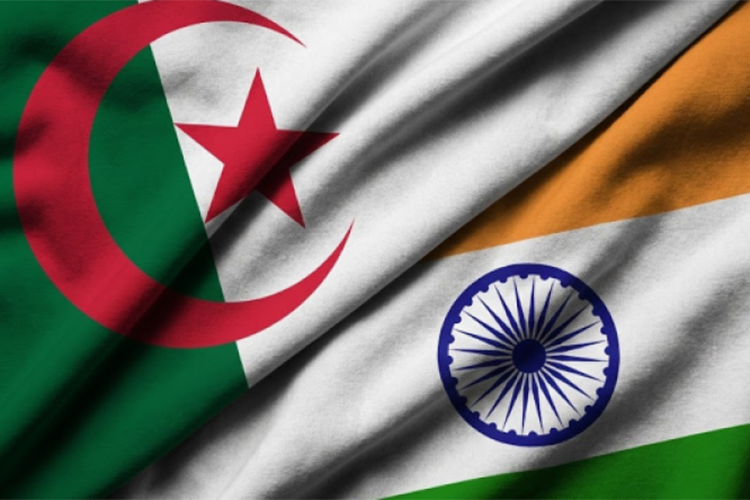
Algeria and India share a significant historical connection, rooted in their respective independence struggles, with India regaining sovereignty in 1947 and Algeria in 1962. This shared past, particularly highlighted by the 1955 Bandung Conference, laid the groundwork for a vision of post-colonial sovereignty and non-alignment. India's remarkable journey over nearly eight decades, transitioning from widespread poverty to a global nuclear, space, pharmaceutical, and digital power, and becoming one of the world's largest economies without relying on oil or gas revenue, offers valuable insights. This trajectory demonstrates strategic foresight in achieving strength, rather than waiting for wealth.
Despite this historical affinity and the absence of any territorial disputes or historical animosity, the economic exchange between the two nations remains considerably below its true potential, registering at approximately $1.71 billion during the 2024-2025 fiscal year. Relations have seen some cooperation, including a joint committee established in 1981, Algerian cadres benefiting from Indian training programs, and Indian firms participating in Algerian railway and energy projects. A delegation of 65 Indian pharmaceutical companies also visited Algeria in January 2026. Currently, Algeria primarily exports hydrocarbons while importing machinery, medicines, chemicals, grains, and manufactured goods. This imbalance points to an opportunity to evolve the relationship from a buyer-customer dynamic to one of genuine partnership, focusing on joint ventures, technology transfer, training, local supply chains, and engineering knowledge retention within Algeria.
Realizing the full potential of this partnership requires concrete steps. A direct air link between Algiers and New Delhi, scheduled for late October 2026, is seen as more than just an additional flight; it is anticipated to inaugurate a new economic and human corridor. Enhancing robust financing mechanisms and clear payment procedures is also essential for businesses. Addressing mutual unfamiliarity between each other's markets, as well as streamlining regulatory procedures, especially in the pharmaceutical and food industries, are critical areas for improvement. Ultimately, the partnership's growth will depend on increased mobility and direct engagement among engineers, doctors, researchers, students, and businesspeople.
The collaborative potential extends across several key sectors. In pharmaceuticals, combining India's deep generic drug industrial system with Algeria's significant pharmaceutical industry and large market offers an opportunity for joint manufacturing in Algeria, targeting African markets. For engineering projects, large contracts should ensure the training of Algerian technicians, integration of local supply chains, and transfer of knowledge in maintenance and design. The digital sphere can benefit from India's extensive experience in digital identity, payments, and large-scale public services, with Algeria developing its own model while maintaining full data sovereignty. Furthermore, space technology offers Algeria, a country of 2.4 million square kilometers, the capability to monitor water resources, crops, fires, and borders. Investing in human capital through joint training programs for Algerian and Indian professionals will be crucial. Algeria offers India a Mediterranean platform, African depth, energy resources, and diplomatic weight, while India provides advanced industrial systems, pharmaceutical expertise, and a model for transforming post-colonial sovereignty into productive capacity, solidifying a vision for Algeria as a first-rank strategic partner.