















Tighennif Site Yields 2.35-Meter Prehistoric Elephant Tusk
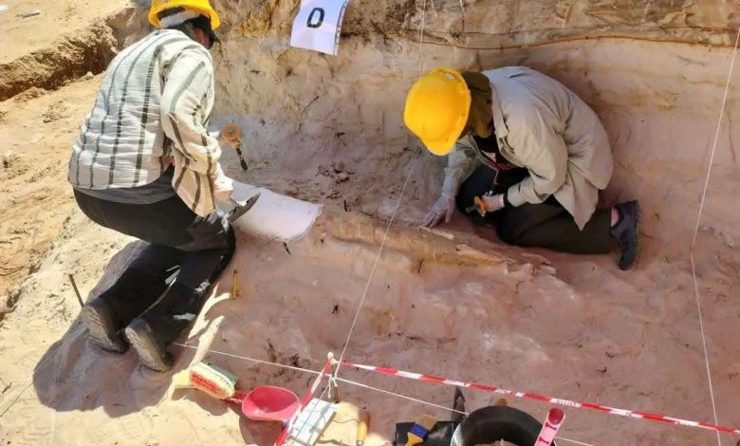
An Algerian research team has made an exceptional discovery, shedding new light on North Africa's ancient wildlife. The National Center for Prehistory, Anthropology, and History (CNRPAH) in Algeria announced the unearthing of a nearly complete tusk, measuring approximately 2.35 meters in length. This significant artifact belongs to an extinct elephant of the Loxodonta atlantica species, identified as one of the largest mammals to have inhabited North Africa in antiquity.
The discovery took place at the Tighennif archaeological site in Mascara province, a location already globally recognized for housing remains of "Atlantropus mauritanicus," a subspecies of Homo erectus, dating back between one and 1.2 million years. The tusk itself is noted for its exceptional preservation and rare structural integrity. Professor Mohamed Sahnouni led the multidisciplinary team responsible for the field excavations at this pivotal site, which serves as a crucial testament to ancient human civilizations and natural environments in the region.
Following its discovery, the tusk is set to undergo a meticulous process of stabilization and transport to specialized laboratories for conservation and in-depth study. Its remarkable condition will facilitate advanced analyses, which are expected to reveal details about the animal's diet, as well as the climate and environmental conditions prevalent in North Africa over a million years ago. This research promises to significantly enhance understanding of the region's prehistoric ecology, with a potential future display of the artifact in national museums.